
HOLY TUESDAY | The Day of Controversy
HOLY TUESDAY | The Day of Controversy
Scripture Reading: Psalm 118:19–27 | Psalm 110 | Luke 20 | Matthew 23
HISTORICAL & CULTURAL CONTEXT
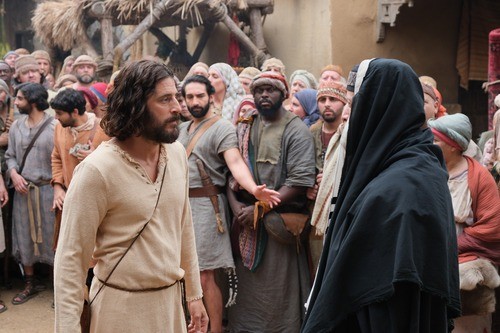
Holy Tuesday was the most publicly confrontational day of Passion Week. The religious establishment came at Jesus from every angle. The chief priests and elders challenged His authority. The Pharisees and Herodians — sworn enemies who had temporarily united against a common threat — tried to trap Him on the question of paying taxes to Caesar. The Sadducees (who denied the resurrection) attempted to discredit the doctrine of resurrection. A scribe tested Him on the greatest commandment.
In every case, Jesus not only answered but exposed the emptiness behind the question. When asked about taxes, He called for a denarius — the Roman coin with Caesar's image — and drew a distinction between civic obligation and ultimate allegiance. When the Sadducees raised a hypothetical about marriage in the resurrection, He corrected their theology directly: "You know neither the Scriptures nor the power of God."
Then Jesus turned the tables. He asked them a question they could not answer: whose son is the Messiah? When they said David's, He cited Psalm 110 — a psalm written by David himself — where David calls the Messiah "my Lord." How can the Messiah be David's son and David's Lord at the same time? The crowd was silenced. Matthew records that "from that day no one dared to ask him any more questions."
Jesus then delivered what scholars call the Seven Woes — a series of solemn condemnations against the scribes and Pharisees in Matthew 23. These were not expressions of anger. They were the words of a righteous judge pronouncing the verdict on false religion.
In every case, Jesus not only answered but exposed the emptiness behind the question. When asked about taxes, He called for a denarius — the Roman coin with Caesar's image — and drew a distinction between civic obligation and ultimate allegiance. When the Sadducees raised a hypothetical about marriage in the resurrection, He corrected their theology directly: "You know neither the Scriptures nor the power of God."
Then Jesus turned the tables. He asked them a question they could not answer: whose son is the Messiah? When they said David's, He cited Psalm 110 — a psalm written by David himself — where David calls the Messiah "my Lord." How can the Messiah be David's son and David's Lord at the same time? The crowd was silenced. Matthew records that "from that day no one dared to ask him any more questions."
Jesus then delivered what scholars call the Seven Woes — a series of solemn condemnations against the scribes and Pharisees in Matthew 23. These were not expressions of anger. They were the words of a righteous judge pronouncing the verdict on false religion.
"You shall love the Lord your God with all your heart and with all your soul and with all your mind. This is the great and first commandment. And a second is like it: You shall love your neighbor as yourself. On these two commandments depend all the Law and the Prophets." — Matthew 22:37–40 (ESV)
DEVOTIONAL REFLECTION
On this day, Jesus demonstrated that true spiritual authority does not flinch under pressure. Every trap laid before Him became an opportunity to reveal truth. The religious leaders had the Scriptures but had lost sight of the God the Scriptures were about. Jesus called that out — and He still does.
REFLECTION QUESTIONS
- Jesus exposed religious leaders who performed religion outwardly while missing its heart. What is the difference between knowing about God and actually knowing God?
- The greatest commandment calls for love with heart, soul, and mind — the whole person. Which of these three tends to be most disengaged in your walk with God?
- How does Jesus' example on this day — firm in truth, patient under pressure — challenge the way you engage people who question or oppose your faith?
Recent
Archive
2026
2025
November
Day 1 – God Said It FirstDay 2 - The Living WordDay 3 – Framed by FaithDay 4 – The Word That Never FailsDay 5: The Word AccomplishesDay 6 – Weekly Review: His Word Is My FoundationDay 7 – Reflection Challenge: Speak Until You See ItDAY 1 — Wisdom Begins With PerspectiveDAY 2 — Wisdom Sets BoundariesDAY 3 — Wisdom Manages Time and SeasonsDAY 4 — Wisdom Governs FinancesDAY 5 — Wisdom at HomeDAY 6 — Wisdom and DisappointmentDAY 7 — Reflection Challenge: Build With Wisdom
No Comments